
Why "Business Leader First, People Leader Second" Is Holding HR Back
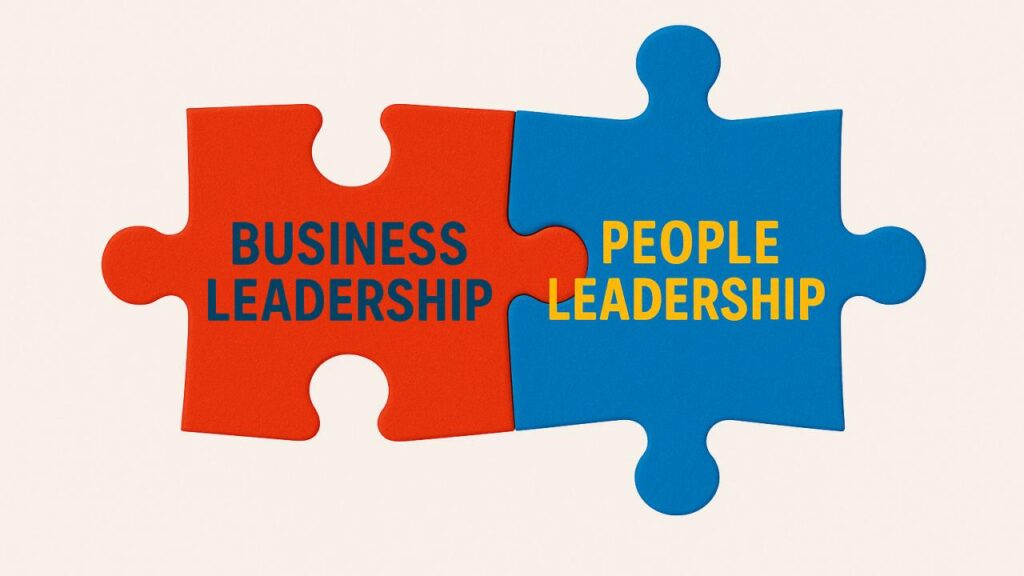
For years, HR professionals have been told the same thing: to gain influence, position yourself as a “business leader first, people leader second.” This advice is everywhere – in leadership programs, executive coaching, and career guidance for HR professionals.
I understand the intention. It encourages HR to connect with business priorities rather than operating in an HR bubble. But after leading HR across four different organizations, I’ve found this mindset creates more problems than it solves.
The False Choice
The “business leader first, people leader second” approach creates an artificial divide in how HR professionals view themselves and their work. It’s like telling a doctor to be a medical scientist first and a healer second – it misunderstands that excellence requires both simultaneously.
Let’s be clear: You can’t be an effective business leader without being an exceptional people leader.
Research backs this up. Deloitte’s 2024 Global Human Capital Trends survey found 76% of leaders believe human improvement directly drives business success. Gallup’s research shows a leader’s approach has four times more impact on engagement than work location.
What This Looks Like in Practice
The typical advice draws this distinction:
- A “people leader” focuses on HR operations, rewards programs, and engagement scores
- A “business leader” asks how HR can drive company goals
- A “people leader” builds expertise in engagement and performance management
- A “business leader” concentrates on market analysis and financial metrics
But this creates an impossible tension in how HR leaders approach their role.
My Real-World Experience
At one company, we faced high turnover among hourly workers. The jobs were physically demanding, and poor leadership was clearly driving people away. My expertise in leadership development was exactly what the business needed – not despite being “people leadership” but because it solved a fundamental business problem.
The frustration? These turnover costs didn’t appear as a direct line item on financial statements. Leadership development was treated as a nice-to-have HR initiative rather than essential business infrastructure. The cycle of hiring, training, losing people, and repeating continued unaddressed.
The problem wasn’t about choosing business or people focus – it was about connecting these dimensions that our systems artificially separated.
No Other Function Faces This Pressure
Finance leaders aren’t told to be “business leaders first, finance leaders second.” Marketing leaders aren’t advised to downplay their marketing expertise.
Only HR faces this expectation to adopt a different primary identity. This reveals something important about how organizations value different types of expertise.
The Way Forward: Integration, Not Prioritization
The solution isn’t choosing one identity over another. It’s integrating business and people leadership into a unified approach:
- Ask: “What business goals are we pursuing, and what people capabilities will enable these outcomes?”
- Develop expertise in both business dynamics AND how human systems drive performance
- Create clear connections between people initiatives and business results
- Build measurement systems that make these connections visible
This Matters Even More in the Age of AI
As AI transforms our workplaces, integrated leadership becomes essential. With technology handling analytical tasks, human capabilities like empathy, ethical judgment, and creativity become more critical to business success, not less.
As Cisco’s Chief People Officer Kelly Jones notes, “soft skills have become more of a hard skill” with a “straight line” between employee experience and business results.
Three Steps for HR Leaders
- Integrate your leadership identity: Stop compartmentalizing “business leader” and “people leader” aspects of your role. Develop a unified approach that brings your people expertise directly to business challenges.
- Create connecting narratives: Build clear stories that show how specific people capabilities enable business outcomes. Show how leadership development, culture, and talent approaches drive concrete business results.
- Design integrated initiatives: Start HR projects by understanding business challenges, then design people solutions that address these challenges, making the connections explicit.
Moving Forward
The most effective HR leaders I know don’t think of themselves as business leaders who happen to work in HR. They’re integrated leaders who apply deep people expertise to drive business success.
Has your organization moved beyond the “business leader first, people leader second” mindset? What approaches have you found most effective? I’d love to hear your experiences in the comments.